Finding Equilibrium
Finding Equilibrium – Leadership Program
Modern Workplaces Bring New Demands
Studies show that modern leaders are crying out for support.
According to Gallup:
- Only 48% of managers strongly agree that they currently have the skills needed to be exceptional at their jobs
- Leaders are more likely to be burned out and disengaged than their teams.
Modern workplaces are multi-generational, change-saturated, with high work and compliance demands and teams that are often under-resourced and fatigued.
These factors, combined with a stronger focus on psychological wellbeing across global workplaces, highlight the need to support leaders to navigate these conditions.
Change management in the workplace offers numerous benefits that can significantly enhance organisational performance and employee satisfaction.
What Does Safe & Effective Leadership Mean?

To Lead Safely
Leaders are fostering environments that enable everyone to psychologically thrive.
To Lead Effectively
Leaders are delivering on team and organisational results.
Safe and effective leaders create good work,
and according to Beyond Blue,
good work helps mental health and wellbeing.
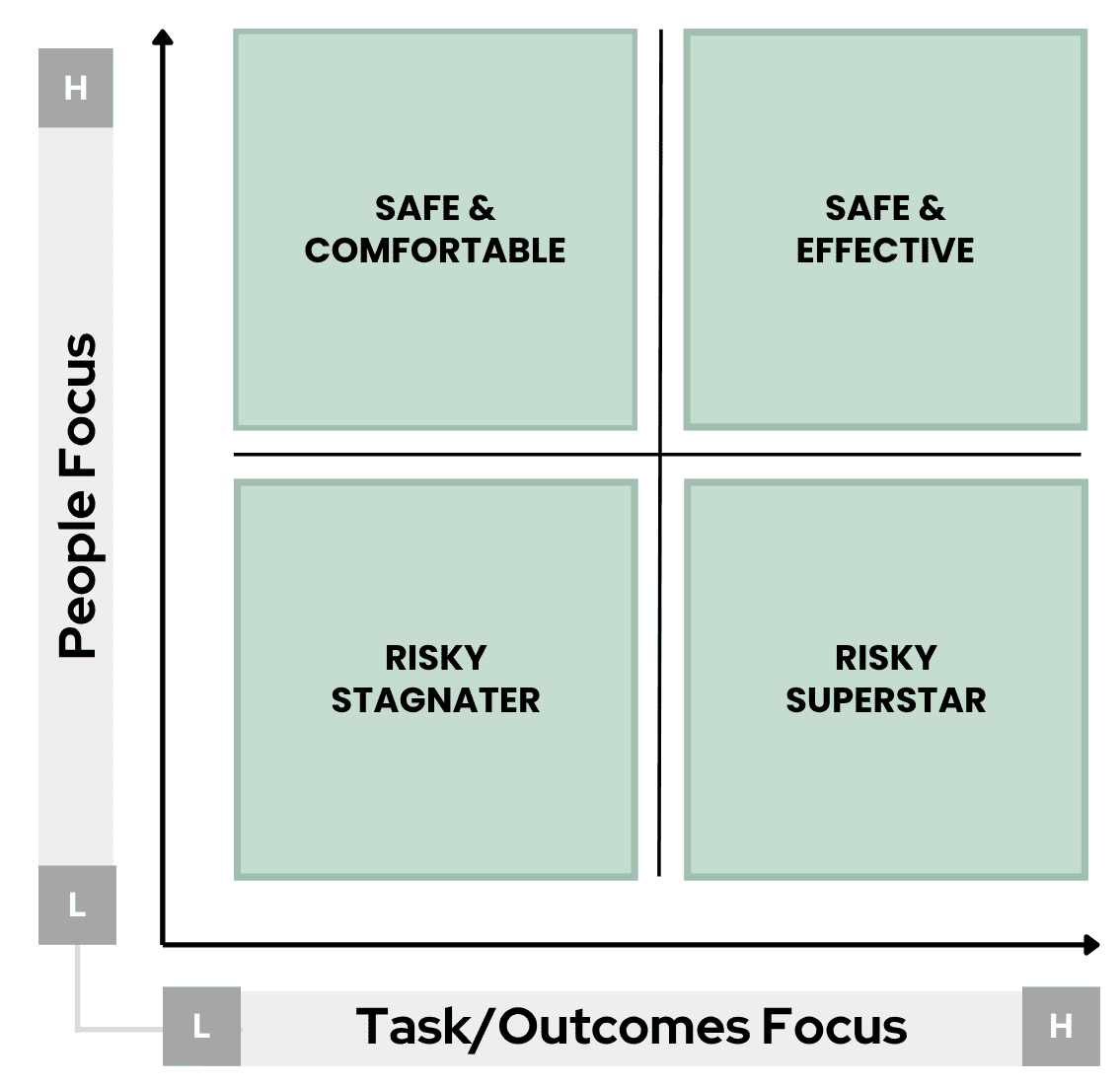
Leading Safely and Effectively requires a dual focus on people and outcomes. Neither can be sacrificed; both are mutually dependent.
The Safe and Effective Leadership model (right) helps leaders in modern workplaces assess their current state of leadership safety and effectiveness.
From there Leaders can identify the supports and competencies needed to consistently situate in the Safe and Effective Leadership quadrant – necessary for individual, team and organisational success.
It is widely acknowledged by leadership theorists that most leaders have a dominant and non-dominant style. Understanding how the dominant style may be influenced – for example when placed under pressure – is equally important as leaders strive for consistently safe and effective performance. We unpack this with leaders in our development programs.
Our Leadership
Development Programs
Our Leadership development programs are contextualised to your specific organisational context, leadership team size, level, desired duration, and your current-future state change gap.
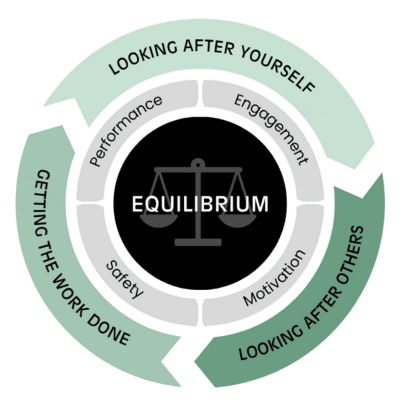
Our programs align to our Finding Equilibrium model (and book of the same name) which are compulsory components of our programs.
Looking After Yourself
This series encompasses the safe and effective leadership questionnaire and development plan, sustainable leadership, strengths-based profiling, role mastery, role clarity, leadership support and how to thrive at work.
Looking After Others
This series explores leading with positive influence, understanding drive, motivation and engagement, understanding stretch, stress and strain, understanding job demands, job crafting and leading team culture.
Getting the Work Done
This series explores coaching for growth and accountability, the holy grail of workload management, performance, engagement, motivation and safety, prioritisation tools, and how to mitigate change saturation and fatigue.
Internal Sponsorship
Leadership programs are most successful when there is a sponsor of this work internally and when Leaders are intentionally given the space to focus on and implement the exercises and practices from the program modules.
Long term leadership development initiatives such as ours also benefit from regular monthly touch-bases with internal change agents/sponsors to keep informed of group progress, development, and initiatives.
This also ensures we are kept up to date with any relevant organisational happenings that may have an influence on the program or participants.
In our experience this is hugely beneficial for sponsors and participants alike.
Your return on investment is extremely important to us, and these measures help ensure that.
Program Details
Mode of Delivery
Programs are generally face to face. Programs can be delivered in intensive mode or full days over a six- or twelve-month time frame. Some pre work is required by participants prior to commencement.
Email alexandra@tanyaheaneyvoogt.com for further information and bookings.
Numbers and Pricing
Costs are based on days of delivery rather than number of participants. However, to ensure learning outcomes, groups may be capped at around 25 people.
We will provide a preliminary pricing over the phone in the first instance before providing your detailed quotation.
Bespoke Modules
Tanya provides relevant changes to existing programs and additional bespoke content based on your specific context and needs.
Interested in Finding Equilibrium?
Click below to book in a discovery chat with Tanya to discuss your support needs further.