It’s 2025 and change is still front and centre on the radar in the workplace (and the world!)
I talk and write about change a lot. I’m a certified change practitioner with significant experience and expertise in supporting individuals and organisations to make change.
I know “change” is a thing. It’s real. BUT… I ponder on whether workplace change can still be defined as an extraordinary event.
Let me explain.
Traditionally, change looked something like this:
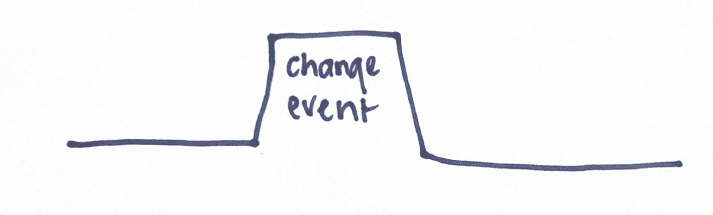
You would be moving along in your normal state, and an event would occur that moved you out of that normal state and required new responses, new ways of working/thinking/being/doing. This “change” had a fixed start and end date. It was an “event”.
But modern workplaces are more like this:
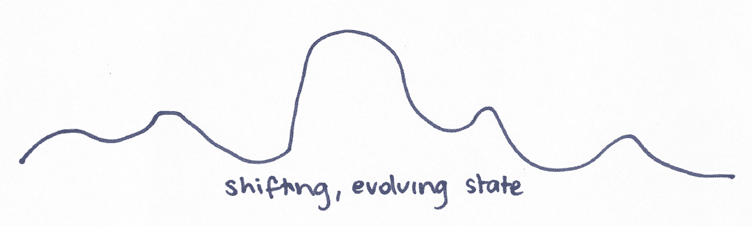
They are in a constant shifting state of change, evolution, shifting, moving. And whilst most people know and feel “change is constant” these days, I do wonder if somewhere deep inside we are still attuned to (and more comfortable with) the earlier version. Where everything was static, then a disruption, then static again.
These days to help us embrace and grow through “change” – we need to recognise emotionally and intellectually that our workplaces are more like the earths tectonic plates. Ever moving, shifting, creaking, and adjusting.
And just like workplace change, sometimes the shift is so big it causes major impact and potentially damage. At other times we might feel a slight tremor or murmur that gives us a little wobble, but nothing significant.
I think this is how we need to view workplaces now – this ever-shifting tectonic plate like environment.
The technology revolution, changing social pressures, shifting expectations of employees and the sheer pace and volume of demands and “right now” expectations has put pressure on the work ecosystem and this is the result.
However, much like when “change” was an event, the critical question still remains – how do we help people navigate this reality?
The reality of:
- Trying to redefine culture and leadership to meet the shifting environment
- Navigating restructures, realignments, redeployments and redundancies which are shaking up many sectors
- Trying to manage psychosocial risks
- Digital transformations that are lengthy and require endurance and patience and tolerance but clarity and support for the workforce in the process
- New ways of working to create efficiencies
- Managing the wellbeing of our people whilst expecting high performance – in other words Finding Equilibrium.
Firstly, we need to acknowledge that change is ever present. Like the seasons we experience, or the changes our body undergoes as we age, or our financial situation. On a human level we are always shifting and moving to adjust to changing conditions. We need to see workplaces in the same way. Nothing is static. If we normalise this reality, we help release the fear associated with shifts.
Secondly, we need to help people build adaptability skills. Techniques and mindset hacks that they can draw on when they feel resistance or fear associated with a change or uncertainty.
Thirdly, we need to ensure we support people adequately throughout a shift. And the more intense or impactful the shift – the more support required.
Think of the community response to an earth tremor, versus that to an earthquake. Support needs to adjust to the conditions and dial up or down as needed. Support is both emotional and practical. Don’t fail to acknowledge the impact on people’s hearts and minds during impactful changes. It is not just their plight they’ll be feeling, but that of their colleagues too.
Importantly the way we design any change is fundamental in how people embrace and grow through that change. If we don’t design and communicate change in a way aligned with best practice change management, then the human impact can be much more significant.
That means a drop in productivity, engagement and motivation during the change and a lasting smelly tail post the change that taints your culture. It is much harder to recover from the stench of a poorly managed change than to spend time before and during the change to navigate it well.
There are many change frameworks that change practitioners like me use when designing and supporting organisational change.
If you don’t have the luxury of internal change management support or expertise and your change is more than a minor incremental shift, then I strongly encourage you to seek support or at least deepen your own understanding of change methodology and frameworks.
Want to chat change? Book a time with me here.
For a simple tutorial on tectonic plates try this one: https://youtu.be/vxmoxDznXe4?si=wt7nNPWmfRwasvKn

0 Comments