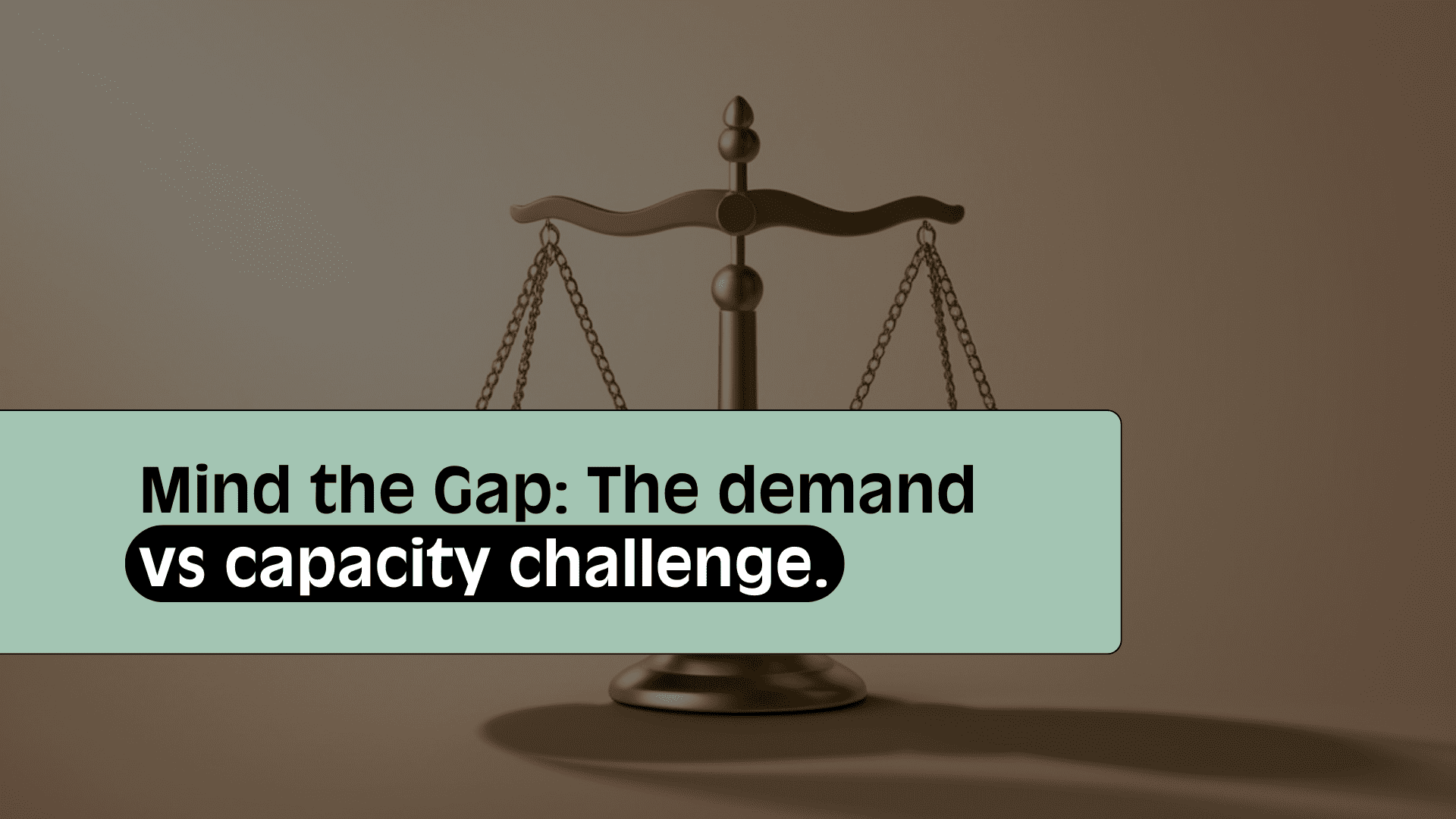
Mind The Gap: The demand vs capacity challenge
How do you navigate the gap between organisational demands and human capacity?
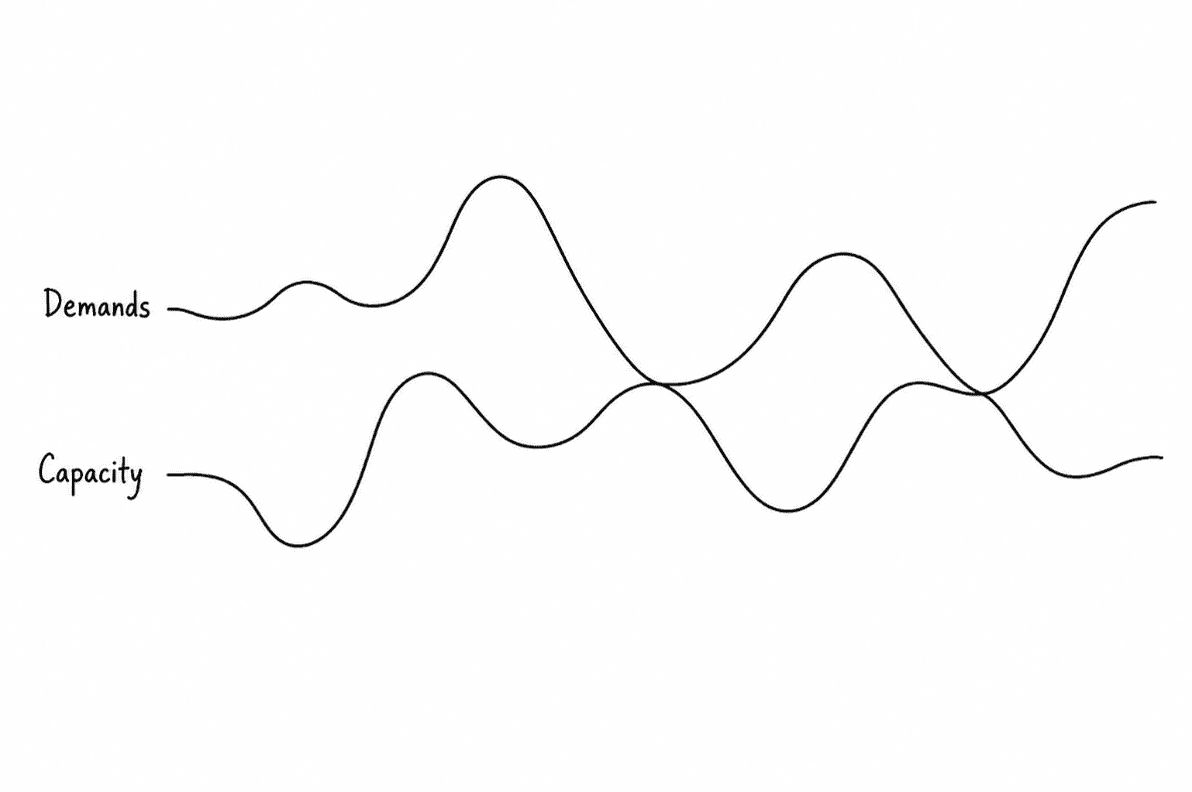
Both of these ebb and flow, move and shift.
Neither of these elements are static.
Constant monitoring and real time course corrections are needed, but, in some cases, demands and capacity shifts are predictable.
What patterns do you see that help you predict demand increases and/or capacity decreases:
Here’s some examples:
Predictable Demands:
- Financial / Accounting deadlines – monthly, quarterly, end of financial year. These are set and you know that at each milestone job demands will increase.
- Seasonal fluctuations dependent on your industry and business. What do your customers do at which time of year? What else changes?
- When is “grant” season?
- Enrolment times if you’re an educational facility.
- Other historical patterns that show your peaks and troughs.
- Planned organisational changes that draw on internal resourcing.
Now let’s look at some of the Capacity Deficits we can generally predict:
- School holiday periods depending on the demographics of your workforce
- Public holiday long weekends
- Christmas/New Year
- Winter (Flu season)
- Annual leave and ADO entitlements – what are your accruals looking like in your team?
- Seasonal impacts – i.e. bushfire, flood, storm.
Stop and consider for a moment some of the yearly trends you know exist within your teams?
Now think about the next 90 days. What’s on the drawing board that will increase demands or reduce capacity? Or both?
How are you preparing for that?
For example:
- Do you strategically think about other demands that may arise? I.e. scenario plan?
- Do you assess what can be parked during these peak demand times and explicitly communicate this in advance?
- Do you consider back up resourcing or where you can draw support from during these times?
- Do you communicate to internal and external stakeholders in advance so expectations are managed proactively?
- What else could you try?
Thinking about these questions has three operational and human benefits:
- It helps build situational adaptability (change responsiveness).
- It reduces anxiety around what might go wrong, because you’ve already mapped out the plan.
- The approach is strategic and prevents operational and human risks in your business. Such a strategic approach is at the highest level of Prioritisation Safety.
Did You Miss It?
I wrote extensively about Prioritisation Safety in my last Blog. Click here to read more.


0 Comments